
Home Sleep Apnea Sleep Apnea Testing
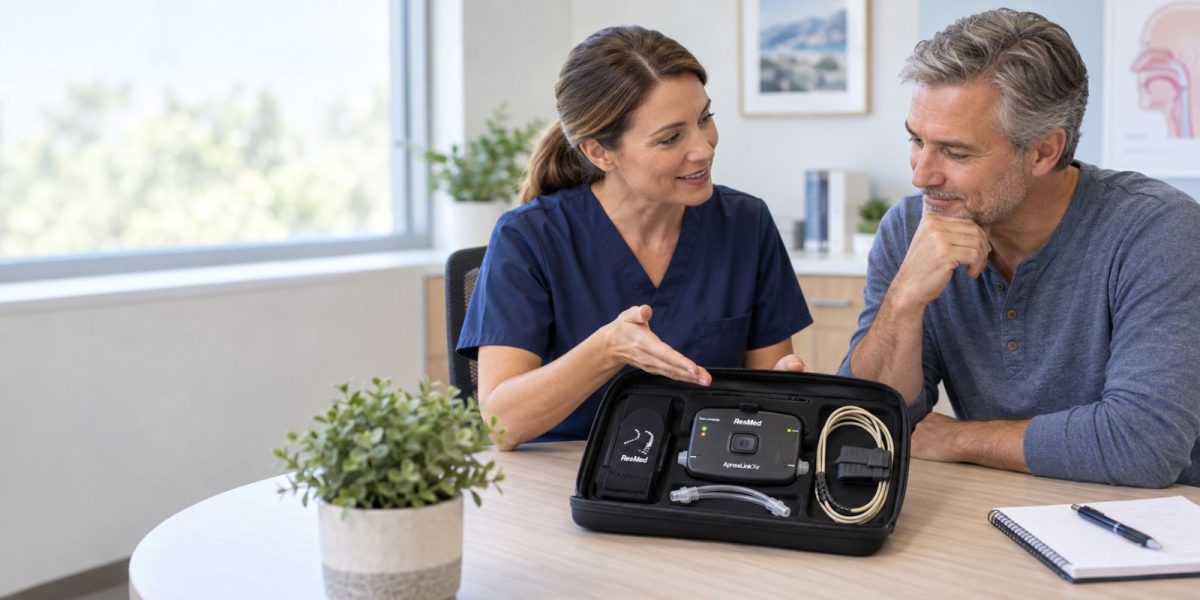
Diagnostic Sleep Testing
Sleep Apnea Testing
Learn how home sleep apnea tests and in-lab sleep studies record breathing while you sleep, what to expect, and how MedPro may support home testing.
Understand the Test
How Sleep Apnea Testing Works
Sleep testing records breathing and related signals during sleep. A qualified healthcare professional uses the results together with symptoms, health history, and clinical assessment to determine whether sleep apnea is present and what should happen next.
The Test Records Information
Depending on the test, recorded signals may include airflow, breathing effort, blood-oxygen level, heart rate, sleep stages, body position, and movement.
The Testing Pathway Is Individual
A home test may be suitable for some adults, while an in-lab study may be recommended when more extensive monitoring or assessment is needed.
Quick answer: A home sleep apnea test is a diagnostic pathway for selected adults, not an online screening quiz. The test must be completed correctly and the recorded data must be interpreted through the applicable clinical process.
Testing Pathways
Home Test or In-Lab Sleep Study?
Both pathways collect information during sleep, but the setting, equipment, level of monitoring, and reasons for choosing each test are different.
Home Sleep Apnea Test
A portable test completed in your usual sleeping environment. It records a focused set of breathing-related signals and may be appropriate for selected adults when obstructive sleep apnea is suspected.
- Portable equipment used at home
- Focused breathing and oxygen monitoring
- Unattended overnight recording
- Professional review is required
In-Lab Sleep Study
An attended study completed in a sleep laboratory. It can record more signals, including sleep stages, and may be recommended when a more detailed assessment is needed.
- Completed in a sleep laboratory
- More extensive physiologic monitoring
- Attended by trained staff
- May help assess complex situations
| Comparison | Home Sleep Apnea Test | In-Lab Sleep Study |
|---|---|---|
| Setting | Your usual sleeping environment | A sleep laboratory |
| Monitoring | Focused breathing-related signals | More extensive signals, including sleep stages |
| Overnight staff | Unattended | Attended by trained staff |
| May be considered when | Selected adults have suspected uncomplicated obstructive sleep apnea | More detailed or complex assessment is needed |
| Results | Both require professional interpretation in the context of the individual clinical situation | |
The right test is a clinical decision. Home testing is not appropriate for everyone. A healthcare professional may recommend an in-lab study or additional testing based on health history, symptoms, other suspected sleep disorders, or an inconclusive home test.
Home Sleep Apnea Testing
What to Expect with a Home Sleep Apnea Test
The exact pathway varies by province, referral requirements, eligibility, and local service arrangements. A typical home-testing process follows these five stages.
1
Confirm the Testing Pathway
Referral, eligibility, documentation, and whether home testing is appropriate are confirmed through the applicable process.
2
Receive the Kit and Instructions
The portable equipment is supplied and you receive instructions for placing the sensors and completing the recording.
3
Set Up the Sensors at Home
Follow the supplied instructions to position each sensor securely before going to sleep.
4
Complete the Overnight Recording
Sleep with the equipment in place for the instructed period. If a sensor comes loose, follow the directions supplied with the kit.
5
Return the Kit for Review
Return the equipment as directed. The recorded data are then prepared for professional interpretation and follow-up.
Important: Follow the instructions supplied with your specific test. If you are unsure how to place a sensor, a component does not work, or you cannot complete the recording, contact the team that provided the equipment.
Portable Monitoring
What the Equipment May Record
Home-test devices differ. Depending on the equipment and ordered test, sensors may collect some or all of the following information.
Airflow
Changes in airflow through the nose and mouth.
Breathing Effort
Movement associated with breathing during sleep.
Oxygen Level
Blood-oxygen saturation during the recording.
Pulse or Heart Rate
Heart-rate information captured by the device.
Before the Recording
Prepare for Your Home Test
- Read the instructions before bedtime
- Confirm that each component is present
- Follow any preparation directions you were given
- Apply the sensors exactly as demonstrated
- Keep the return instructions and packaging
Do not change medications, oxygen, PAP therapy, or your usual care routine unless the healthcare professional responsible for your test gives you specific instructions.
After the Sleep Test
What Happens After the Test?
The recording is only one part of the assessment. Results must be reviewed and considered with the rest of your clinical information.
The Recording Is Checked
The data are checked to determine whether the recording is adequate for interpretation.
Results Are Interpreted
The appropriate healthcare professional interprets the results in the context of your symptoms and health history.
Next Steps Are Recommended
You may receive a diagnosis, be asked to repeat or complete additional testing, or discuss treatment options.
A home test that is negative, inconclusive, or technically inadequate does not always rule out sleep apnea. Your healthcare professional may recommend an in-lab study or another next step.
MedPro Support
How MedPro May Support Home Testing
Depending on your location and the applicable program, MedPro may help coordinate portable testing equipment, explain how to use the kit, arrange its return, and guide you toward the appropriate follow-up pathway.
Referral, eligibility, funding, and documentation requirements vary. Contact a local MedPro clinic before relying on a specific testing or coverage pathway.
Information You May Be Asked For
- A referral or testing request, when required
- Your contact and healthcare-provider information
- Relevant coverage or payer details
- Any instructions or documents already provided
Related Guidance
Continue Your Sleep Apnea Path
Use these pages to understand possible signs, complete a separate risk screening, or learn about treatment after diagnosis.
Signs and Risk Factors
Review common nighttime and daytime signs that may lead someone to discuss testing.
Online Screening
Complete a separate educational risk screen. Screening does not diagnose sleep apnea or replace diagnostic testing.
Treatment Options
Learn about the treatment approaches a clinician may discuss after a diagnosis.
Frequently Asked Questions
Sleep Apnea Testing FAQs
General answers about home tests, in-lab studies, referrals, and results.
Is an online sleep apnea screening the same as a sleep apnea test?
No. An online screening estimates risk based on answers to questions. Diagnostic sleep testing records physical signals while you sleep and requires professional interpretation.
Do I need a referral for sleep apnea testing?
Referral and documentation requirements vary by province, clinic, testing pathway, and payer. Contact your local MedPro clinic to confirm what is required before arranging a test.
What is the difference between a home sleep apnea test and an in-lab sleep study?
A home test uses portable equipment to record a focused set of breathing-related signals without overnight staff. An in-lab study is attended and records more extensive information, including sleep stages. The appropriate option depends on the individual clinical situation.
What does a home sleep apnea test record?
The exact signals depend on the device and ordered test. Common measurements include airflow, breathing effort, blood-oxygen level, and pulse or heart rate. Some devices may also record body position or other information.
Can a home test rule out sleep apnea?
Not always. If a home test is negative, inconclusive, or technically inadequate and sleep apnea is still suspected, a healthcare professional may recommend an in-lab study or additional assessment.
How will I receive my sleep-test results?
The process varies. Results are interpreted through the applicable clinical pathway and then communicated with guidance about whether further assessment or treatment is recommended. Ask the team arranging your test when and how follow-up will occur.
Evidence and Safety
Clinical Sources
This page draws on guidance about diagnostic testing for obstructive sleep apnea and general patient information about sleep studies.
Medical disclaimer: This page provides general educational information and is not a diagnosis or a substitute for advice from a qualified healthcare professional. Testing eligibility, referral requirements, interpretation, and next steps must follow the applicable clinical process.
Sleep Apnea Testing
Have Questions About Testing?
Contact MedPro to ask about local home-testing services, referral requirements, equipment instructions, or the next step in your sleep apnea pathway.