
Home Sleep Apnea Home Sleep Apnea Test
Home Sleep Apnea Testing
Home Sleep Apnea Test
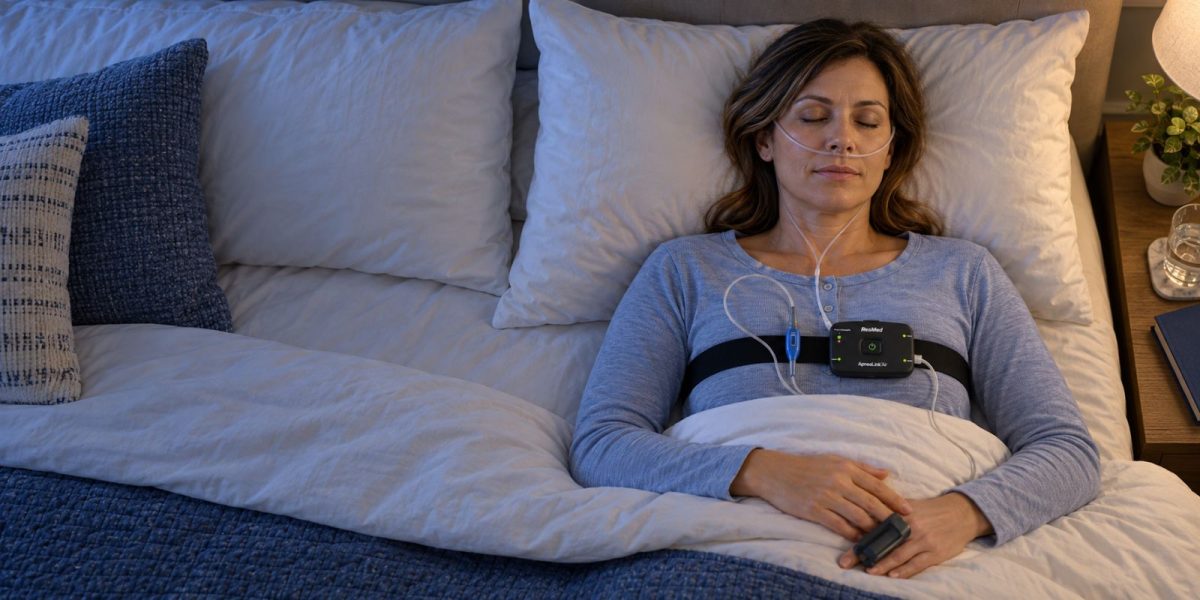
MedPro uses the ResMed ApneaLink Air to record selected breathing information while you sleep at home. Learn who may be eligible, how the test works, and what happens next.
Home-Test Equipment
Home Testing with the ResMed ApneaLink Air™
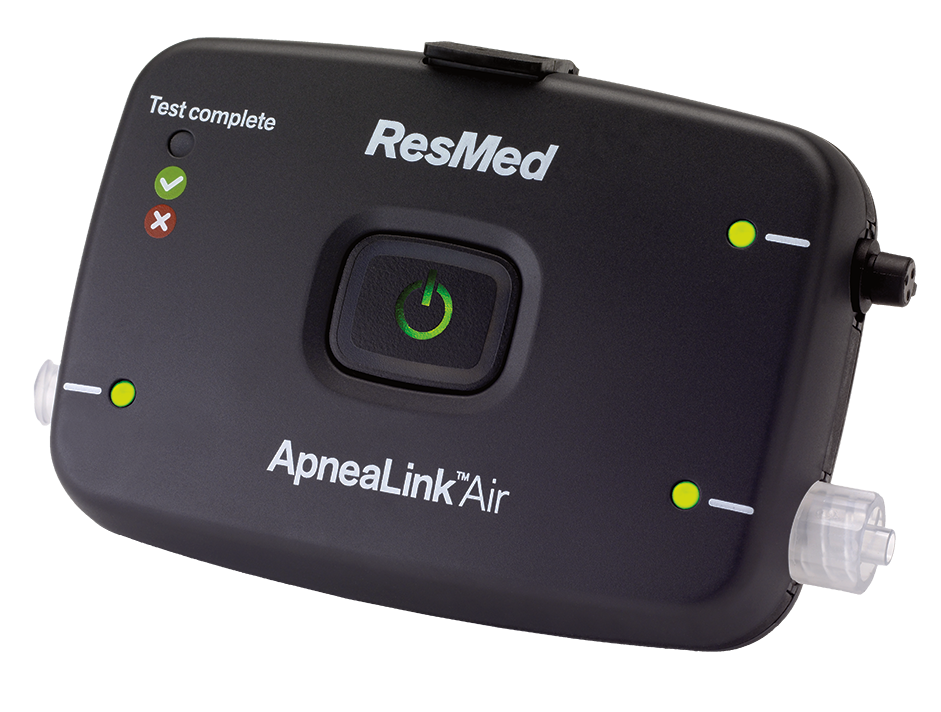
MedPro uses the ResMed ApneaLink Air for home sleep apnea testing. This compact Type III device records selected breathing-related signals while you sleep at home. The recorded data are then prepared for interpretation by the appropriate qualified healthcare professional.
Depending on the configured sensors, the system can record up to five channels:
- Nasal airflow
- Snoring
- Respiratory effort
- Blood-oxygen saturation
- Pulse
One-touch operation and status lights help make the overnight recording process easier to follow.
Important: The ApneaLink Air does not diagnose sleep apnea on its own. A qualified healthcare professional must interpret the recording within the applicable clinical pathway. Exact kit configuration and included accessories may vary; follow the instructions supplied with your test.
Choosing the Right Test
Is Home Testing Appropriate for Everyone?
No. The appropriate test depends on symptoms, health history, other possible sleep disorders, and whether a technically reliable home recording can be completed.
When Home Testing May Be Considered
A qualified healthcare professional may consider HSAT for an adult whose history and symptoms suggest an increased likelihood of obstructive sleep apnea and whose evaluation does not indicate a need for more comprehensive testing.
When Another Test May Be Needed
An in-lab study or additional assessment may be recommended when other sleep disorders or significant health considerations are suspected, or when a home test is negative, inconclusive, or technically inadequate.
Your Testing Path
How a Home Sleep Apnea Test Works
Exact requirements vary by province, referral pathway, provider, and test device. A typical process follows these five stages.
1
Confirm the Testing Pathway
Referral, eligibility, required information, and whether home testing is appropriate are confirmed through the applicable process.
2
Receive the Kit and Instructions
The portable equipment is supplied with directions for preparing the device and placing each sensor.
3
Set Up the Sensors at Home
Follow the supplied device-specific instructions and complete any required equipment check before going to sleep.
4
Complete the Overnight Recording
Sleep with the equipment in place for the instructed period and follow the supplied guidance if a sensor comes loose.
5
Return the Test for Review
Return or transmit the recording as directed so data quality can be checked and the study can proceed to professional interpretation.
Important: The kit and setup instructions supplied for your test are the source of truth. Contact the team that provided the equipment if a component does not work or you cannot complete the recording.
Test-Night Preparation
Before, During, and After the Recording
A simple preparation plan can reduce uncertainty and help you follow the supplied instructions accurately.
Before Bed
- Read the full instructions before your usual bedtime
- Prepare or charge the device as directed
- Set out every sensor and component
- Confirm how and when the test must be returned
During the Recording
- Attach sensors exactly as demonstrated
- Complete any device check shown in the instructions
- Sleep in your usual position unless told otherwise
- Follow the supplied steps if a sensor becomes loose
The Next Morning
- Stop and remove the equipment as directed
- Store each component securely
- Complete any required sleep questionnaire
- Return or transmit the test by the stated deadline
Medication and therapy: Do not stop medication, stop prescribed PAP or oxygen therapy, or otherwise change your care routine for the test unless the ordering professional or testing provider specifically instructs you to do so.
If Something Goes Wrong
Common Home-Test Troubleshooting Questions
Use only the device-specific instructions supplied with the kit. These general next steps do not replace those directions.
A Sensor Comes Loose
Follow the supplied instructions for repositioning it. Do not improvise a different placement or attach a sensor to irritated or damaged skin.
The Device Shows an Alert
Check the approved quick-start or troubleshooting guide. If the alert remains or the device does not start, contact the testing provider.
You Sleep Poorly
Complete and return the test as directed rather than deciding whether the night was adequate yourself. The reviewing team will assess recording quality.
The Recording Is Incomplete
A technically inadequate, inconclusive, or negative study may lead to additional assessment or an in-lab sleep study based on professional review.
Results & Next Steps
What Happens After a Home Sleep Apnea Test?
Returning the kit is not the end of the diagnostic process. The recording must be checked, interpreted, and connected to appropriate follow-up.
Recording Quality Is Checked
The data are reviewed to determine whether enough technically reliable information was captured.
Results Are Interpreted
The appropriate qualified healthcare professional interprets the study in the context of symptoms, health history, and the testing pathway.
Next Steps Are Recommended
Follow-up may include a diagnosis, further assessment, an in-lab study, or discussion of appropriate treatment options.
A negative result may not end the evaluation: If symptoms or clinical concern remain, the healthcare professional may recommend an in-lab sleep study or another next step.
Clear Responsibilities
How MedPro Supports the Home-Testing Process
MedPro uses the ResMed ApneaLink Air for home sleep apnea testing and can support equipment and service logistics, including device education and approved troubleshooting. Clinical testing decisions, diagnosis, and treatment recommendations remain with the appropriate healthcare professional.
MedPro May Help With
- Local service and referral-process information
- Kit pickup, delivery, or return instructions where available
- Device setup education and approved troubleshooting
- Quotes, invoices, or required service documents
Your Healthcare Professional Handles
- Whether HSAT is appropriate for your situation
- The test order and required clinical information
- Professional interpretation and diagnosis
- Recommendations for further testing or treatment
Continue Your Sleep Apnea Path
Related Sleep Apnea Guidance
Use these pages to compare testing pathways, review common signs, and understand what may follow a diagnosis.
Sleep Apnea Testing
Compare home testing with in-lab studies and understand the broader diagnostic pathway.
Symptoms & Risk Factors
Review common nighttime and daytime signs that may lead someone to discuss testing.
Treatment Options
Learn about treatment approaches a clinician may discuss after a confirmed diagnosis.
Frequently Asked Questions
Home Sleep Apnea Test FAQs
General answers about portable home testing, preparation, recording quality, and follow-up.
How long does a home sleep apnea test take?
Many home sleep apnea tests are completed over one night, but the required recording period and number of nights depend on the device and testing instructions. Follow the directions supplied for your test.
Does a home sleep apnea test record sleep stages?
Many HSAT devices do not directly record brain waves or the full set of signals used to determine sleep stages in an in-lab polysomnogram. The exact signals depend on the device supplied.
What if I do not sleep well during the test?
Complete and return the test as directed. Do not decide on your own that the recording failed. The testing team will determine whether the data are adequate or whether another test is needed.
Should I use CPAP or oxygen during a home sleep apnea test?
Follow the specific instructions from the ordering professional or testing provider. Do not stop prescribed CPAP, oxygen, medication, or another therapy unless you have been explicitly directed to do so for the test.
What happens if the result is negative or inconclusive?
A negative, inconclusive, or technically inadequate HSAT may lead to an in-lab sleep study or another form of assessment when symptoms or clinical concern remain.
Is an online sleep-apnea questionnaire the same as a home sleep apnea test?
No. An online questionnaire may identify risk and support a conversation about next steps, but it does not diagnose sleep apnea. HSAT is a diagnostic recording used within an appropriate clinical pathway.
Do I need a referral, and is the test covered?
Referral, eligibility, documentation, fees, and coverage vary by province, payer, clinic, and service arrangement. Contact MedPro and the applicable payer to confirm current requirements before proceeding.
Evidence & Safety
Clinical Sources and Important Limits
This page provides general education about the home-testing pathway. It should be reviewed against current clinical guidance and local service requirements.
Medical disclaimer: This information is not a diagnosis, a test interpretation, or a substitute for advice from your healthcare professional. Follow the instructions supplied with your test and seek appropriate care for symptoms or concerns.
Clinical and Patient-Education Sources
- American Academy of Sleep Medicine: Diagnostic Testing for Adult Obstructive Sleep Apnea
- American Academy of Sleep Medicine: Clinical Use of a Home Sleep Apnea Test
- National Heart, Lung, and Blood Institute: Sleep Apnea Diagnosis
- HealthLink BC: Sleep Studies
- MedlinePlus: Sleep Study
- ResMed: ApneaLink Air Home Sleep Testing Device
- ResMed: ApneaLink Air Patient Instructions
- Province of British Columbia: Obstructive Sleep Apnea—Assessment and Management in Adults
Home Sleep Apnea Testing
Ready to Ask About Home Sleep Testing?
Contact MedPro to ask about local services, referral requirements, equipment instructions, and available next steps.