
Home Home Oxygen Travelling with Oxygen
OXYGEN TRAVEL PLANNING
Travelling with Oxygen
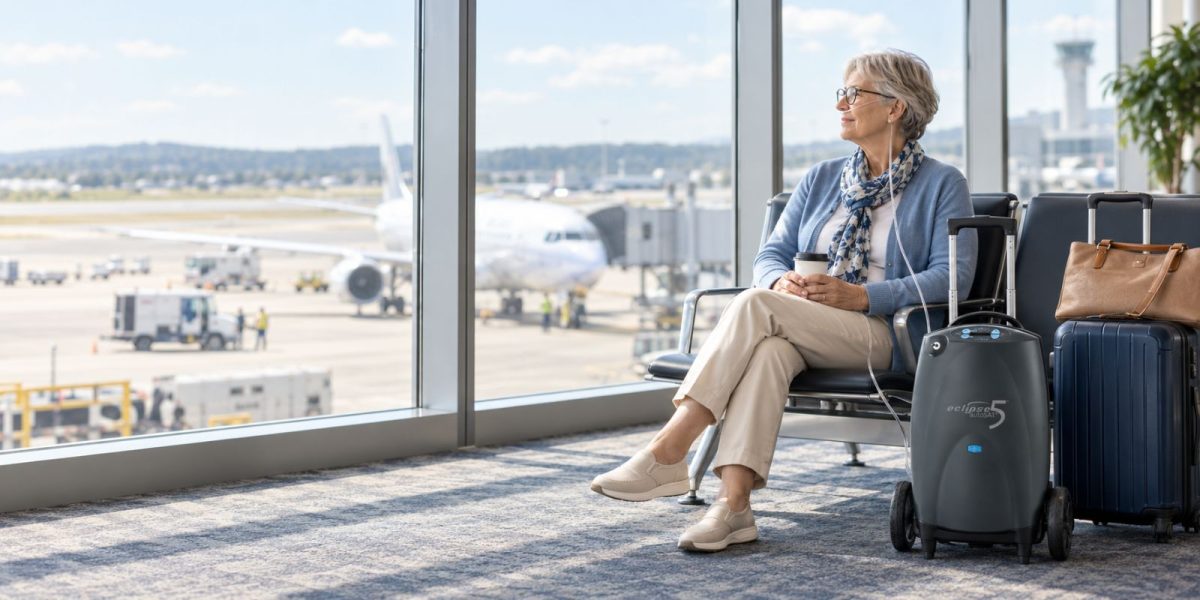
Plan prescribed oxygen, documents, power, carrier rules, destination supply, and a backup before leaving home so each part of the trip is supported.
Quick Answer
Start Planning Before You Book
Travelling with oxygen is often possible, but it requires early coordination. Build the plan around the prescription, exact equipment, complete itinerary, current carrier rules, and a realistic backup.
Speak with Your Healthcare Team
Ask whether the trip, cabin altitude, destination altitude, climate, and planned activities change the medical plan or require updated documentation.
Contact MedPro Early
Review the exact equipment, accessories, expected runtime, routine supplies, and practical backup options available for the itinerary.
Check Every Carrier
Confirm the rules for each airline, train, bus, cruise line, and connection. Screening permission does not replace a carrier’s approval.
Arrange the Destination
Verify power, lodging rules, local oxygen supply, refills, service availability, emergency contacts, and the return-trip plan before departure.
Important: Continue oxygen exactly as prescribed. Do not lower the flow rate to extend a cylinder or battery, increase it for altitude, or substitute equipment without direction from the prescribing healthcare team.
Pre-Travel Plan
Five Steps for an Oxygen-Supported Trip
Start several weeks before departure when possible. Airlines, cruise lines, clinicians, insurers, and destination suppliers may each need time to review or arrange part of the plan.
1
Confirm Medical Readiness
Discuss the itinerary well in advance. Ask whether a medical release, updated prescription, testing, or an individualized plan is needed for air travel or a higher-altitude destination.
2
Map the Entire Journey
Include travel to the terminal, screening, connections, delays, transfers, excursions, lodging, and the trip home—not only the scheduled time in the air or on the road.
3
Confirm Equipment Acceptance
Give each carrier the manufacturer, model, battery type, dimensions, and intended onboard use. Obtain written confirmation when the carrier provides it.
4
Match Supply to Door-to-Door Time
Calculate oxygen and approved battery needs with a delay margin. Arrange charging, refills, or destination supply instead of assuming they will be available.
5
Write the Backup Plan
Know what to do for a delay, depleted battery, empty cylinder, equipment alarm, power outage, missed connection, or unavailable destination supplier.
Documents & Contacts
Keep the Right Information Within Reach
Requirements vary by carrier, route, destination, and medical situation. A compact travel folder can make check-in, screening, service, and unexpected changes easier to manage.
Prescription and Medical Forms
Carry the current oxygen prescription and any carrier-specific medical release or assessment. Keep copies accessible rather than only in checked baggage.
Equipment Details
Record the manufacturer, model, serial number, battery watt-hours, alarm guidance, charger requirements, and supplier contact information for each device.
Contact List
Keep MedPro, the prescribing team, every carrier, the insurer, lodging, destination supplier, and local emergency numbers together in print and on a charged phone.
Coverage and Cross-Border Records
Confirm what insurance covers away from home and whether authorization, receipts, customs documents, or a local supplier agreement is required.
Coverage reminder: A prescription does not guarantee travel, equipment-rental, refill, repair, or out-of-province coverage. Review the insurance and funding guidance and confirm the specific plan in writing.
Air Travel
Flying with Oxygen: Confirm Every Flight
The security authority decides what can pass through screening; the airline decides what it will carry and what may be used onboard. Meet both sets of requirements for every operating carrier.
Confirm the Exact POC
Many airlines permit only approved portable oxygen concentrators for onboard oxygen. Approval applies to the exact model, not to portable concentrators as a general category.
Do Not Assume Cylinders Are Accepted
Personal compressed-oxygen cylinders and liquid-oxygen systems may be prohibited by the airline even when an item can pass a security checkpoint. Ask every operating carrier.
Complete Medical Clearance
Ask the airline which form, prescription, signature, notice period, and confirmation are required. Codeshare and connecting flights may have different processes.
Calculate Battery Watt-Hours
Confirm the watt-hour (Wh) rating of every battery and the operating airline’s current limit. Screening permission does not guarantee airline acceptance, and some carriers apply stricter limits to POC batteries.
Protect Spare Batteries
Keep permitted spares in carry-on baggage with terminals protected from short circuit and batteries protected from damage. Never travel with a damaged or recalled battery.
Prepare for Screening and Stowage
CATSA advises removing the POC main unit from its case and placing it in a bin. Follow crew instructions for use and stowage, and do not depend on an aircraft outlet.
Check current rules before every trip: Air Canada oxygen and medical devices · WestJet oxygen needs · Porter oxygen needs
Road Travel
Travelling by Car with Oxygen
Treat oxygen equipment as essential medical equipment and as a fire-safety responsibility. Secure it, ventilate the vehicle, control heat, and keep the full route smoke-free.
Secure Equipment Upright
Use the approved stand, cart, holder, or restraint so cylinders and portable units cannot roll, tip, fall, or strike a hard surface during stops or sudden movement.
Ventilate and Control Heat
Keep air circulating, follow the equipment instructions, and never leave oxygen equipment in a hot vehicle or a closed trunk. Protect it from direct heat and damage.
Keep the Vehicle Smoke-Free
Do not smoke or vape in or near the vehicle while oxygen is in use or being transported. Keep oxygen away from flames, sparks, and ignition sources.
Plan Stops and Remaining Supply
Know the expected duration of each portable supply, keep tubing clear of doors and seat mechanisms, and verify refills or charging before long or remote routes.
Vehicle safety: Follow the oxygen supplier’s transport instructions and any applicable vehicle, ferry, tunnel, parking, or accommodation rules. Never alter prescribed oxygen use to make a trip last longer.
Destination Planning
Plan for the Destination, Not Just the Journey
Charging access, oxygen supply, equipment service, lodging rules, insurance, and emergency systems can change across provinces and countries. Confirm each one before leaving.
Power Compatibility
Check voltage, frequency, plug type, charger input, and whether the manufacturer permits a simple plug adapter or requires another approved power accessory.
Destination Supply
Confirm who will provide oxygen, where and when delivery occurs, what is included, and how refills, returns, after-hours support, and charges are handled.
Lodging and Storage
Tell the lodging provider about oxygen when required. Confirm smoke-free storage, safe equipment placement, ventilation, power access, and evacuation procedures.
Cross-Border Requirements
Check customs, security, prescription, carrier, supplier, insurance, and equipment-return requirements for every country and transit point on the itinerary.
Local Service Limits
Do not assume MedPro equipment can be serviced, exchanged, rented, or refilled outside its service area. Confirm destination support before departure.
Local Care and Emergencies
Know where to seek appropriate medical care and how to contact local emergency services. In Canada, call 911 for severe breathing difficulty or another emergency.
Backup & Support
Know Who to Contact When Plans Change
A useful backup plan assigns each question to the right organization. MedPro supports equipment; the healthcare team manages clinical decisions; carriers manage transport; emergency services respond to urgent danger.
Contact MedPro For
Equipment operation, accessories, expected runtime, compatible power options, supply planning, alarm guidance, and available support within MedPro’s service scope.
Contact Your Healthcare Team For
Medical fitness to travel, prescription documents, oxygen-flow decisions, new or worsening symptoms, destination altitude, and questions about the treatment plan.
Contact the Carrier or Emergency Services For
Carrier approval, boarding and stowage rules, disruption support, or destination procedures. Call 911 in Canada—or the local emergency number—for severe breathing difficulty, chest pain, blue or grey lips, loss of consciousness, fire, or immediate danger.
Frequently Asked Questions
Travelling with Oxygen FAQs
General answers about advance planning, airlines, portable concentrators, batteries, documents, road travel, destination support, and carrier-specific limits.
How early should I plan a trip with oxygen?
Begin several weeks before departure when possible. The Canadian Lung Association advises planning at least four weeks ahead, while some healthcare teams, carriers, cruise lines, insurers, or destination suppliers may need more time. Reconfirm requirements before the outbound and return trips.
Can I take oxygen on an airplane?
Airlines commonly permit only specified or approved portable oxygen concentrators for onboard oxygen, subject to medical clearance, battery, stowage, and advance-notice rules. Acceptance varies by carrier, aircraft, route, and operating airline, so obtain confirmation for every flight.
Can I bring my personal oxygen cylinder or liquid-oxygen system on a flight?
Do not assume so. Many airlines prohibit passenger-supplied compressed-oxygen cylinders and liquid-oxygen systems even when security-screening guidance lists some small medical cylinders as permitted. The airline’s current policy controls carriage and onboard use.
How many portable oxygen concentrator batteries should I bring?
Bring the amount approved by the airline and sufficient for the complete door-to-door plan plus expected delays. The Canadian Lung Association suggests 1.5 to 2 times the travel duration, but airline watt-hour, quantity, packing, and approval rules still control. Do not assume aircraft power will be available.
What documents should I carry when travelling with oxygen?
Carry the current oxygen prescription, required carrier medical forms or release, equipment make and model, battery watt-hours, MedPro and healthcare-team contacts, destination supplier details, insurance records, and a written backup plan. Keep essential copies accessible.
How should oxygen equipment be transported in a car?
Keep the unit upright and secured with an approved stand, holder, cart, or restraint. Maintain ventilation, keep the vehicle smoke-free, protect equipment from heat and impact, do not leave it in a hot car or closed trunk, and follow the supplier’s instructions.
Can MedPro arrange oxygen or service at my destination?
Contact MedPro early to discuss what support may be available. Rentals, refills, exchanges, deliveries, repairs, and cross-border support depend on the equipment, destination, timing, supplier network, prescription, and coverage. Do not travel until destination arrangements are confirmed.
Evidence & Safety
Travel Sources and Important Limits
Carrier, screening, battery, border, and destination rules can change. Recheck the exact itinerary and all linked guidance during clinical review and immediately before travel.
Medical disclaimer: This page provides general travel-planning education. It is not medical clearance, a prescription, or a substitute for advice from your healthcare professional. Use oxygen only as prescribed and do not independently change flow, schedule, equipment configuration, medication, or another clinical setting.
Clinical, Screening, and Carrier Sources
- HealthLink BC: Oxygen Therapy—Using Oxygen at Home
- Canadian Lung Association: Travel Tips
- CATSA: Accessibility and Medical Needs
- CATSA: Guidelines for Batteries
- Air Canada: Medical Devices and Oxygen
- WestJet: Oxygen Needs
- Porter Airlines: Oxygen Needs
- Transport Canada: Medical Oxygen Cylinders and Portable Oxygen Concentrators
Oxygen Travel Support
Planning a Trip with Oxygen?
Contact MedPro early to review prescribed oxygen equipment, expected runtime, compatible accessories, supply questions, destination planning, and available support.